Curated Resources for Responsible, Ethical Research Worldwide
Explore our growing library of open‑access papers, practical toolkits and expert insights designed to strengthen research integrity and support responsible innovation across life sciences.


Inside our hub, you’ll find peer‑reviewed articles, policy briefs, conference materials and plain‑language templates—each selected by our consultants to promote transparency, patient engagement and smoother regulatory conversations at every stage of research and innovation.

Why Reliable Resources Matter Most
Selecting the right guidance can be as critical as designing the study itself. Out‑of‑date checklists, paywalled articles or unverified commentary risk misinforming teams and eroding sponsor or regulator trust.
EthixMed’s resource team continually reviews journals, regulatory notices and patient‑group publications, discarding anything that lacks empirical grounding or ethical clarity. Each item is annotated with context, relevance and recommended citation guidance—saving you hours of searching and ensuring your documents reflect current standards, authentic patient voices and the latest evidence across rare diseases and emerging technologies.
Our Content Curation Framework
Every resource undergoes a multi‑layer appraisal. A domain specialist first screens for methodological soundness and alignment with recognised principles such as CONSORT, SPIRIT and FAIR data practices. A second reviewer evaluates patient relevance and regulatory utility. Consensus comments are logged, identifiers verified and a plain‑language synopsis prepared. Items are then tagged by therapeutic area, study phase and stakeholder group before appearing online. Quarterly audits retire superseded content, ensuring users always access the most current, trustworthy material available.
Spotlight on Rare Disease Resources
Rare conditions often suffer from fragmented evidence bases and small patient cohorts. To bridge this gap, we maintain a dedicated section highlighting orphan‑drug guidelines, natural‑history registries and community‑authored experience reports.
Our consultants translate complex statistical findings into accessible summaries for advocates, while linking to original datasets for researchers and data scientists. Whether you’re designing an adaptive trial or preparing a compassionate‑use submission, these materials illuminate practical pitfalls, regulatory expectations and lived experiences that can sharpen study design and accelerate meaningful therapies.

EthixMed Insights & Resources

Shams Al-Ani ∙ Anthony Lockett
Interpreting clinical
guidelines
Clinical guidelines are an essential part of clinical and patient decision-making. To be relevant clinical guidelines must incorporate evidence and the opinion of clinicians and patients.

Cognitive bias and human factors in statistics and data in healthcare
Bias and human factors play a major role in the way in which data are interpreted and the resultant decisions. Six common sources of bias and the link that they have to human factors are presented.

Hugh Davies ∙ Simon E Kolstoe ∙ Anthony Lockett
Reshaping consent so we might improve participant choice
Valid consent requires the potential research participant understands the information provided. We examined current practice in 50 proposed Clinical Trials of Investigational Medicinal…
EthixMed Insights
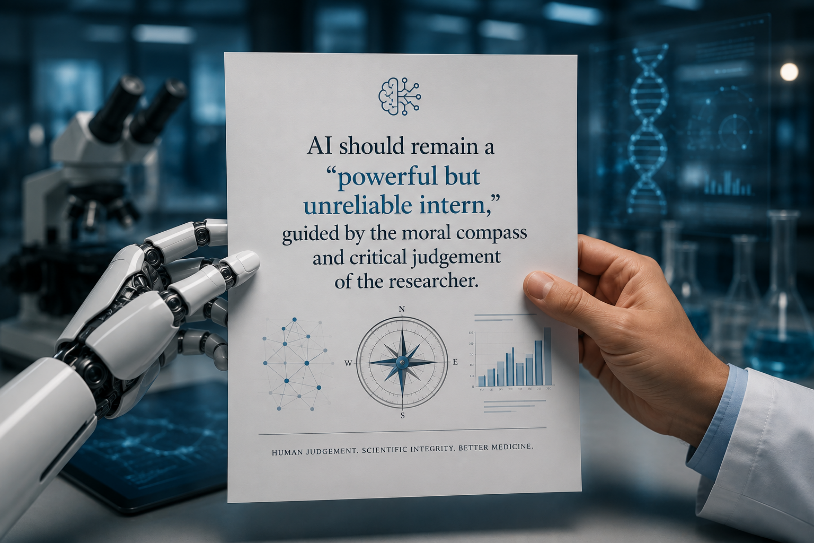
The Unreliable Intern: Navigating the Ethical Minefields of AI in Medical Research
Artificial intelligence (AI) is transforming biomedical research by accelerating data analysis, evidence synthesis, and clinical trial design.

EthixMed Insights
Why Science is facing a mid-life crisis
5 Truths from the frontline of research integrity

Need Expert Support? Book a Consultation Today.
We’re ready to help bring your project forward.

Address
16 Arncliffe Rd,
Leeds, LS16 5AP,
United Kingdom
Contact
Phone: 0771 278 0442
Email: tony.lockett@ethixmed.co.uk
Email: shams.alani@ethixmed.co.uk
© 2026 EthixMed | Legal Notice | Privacy Policy